
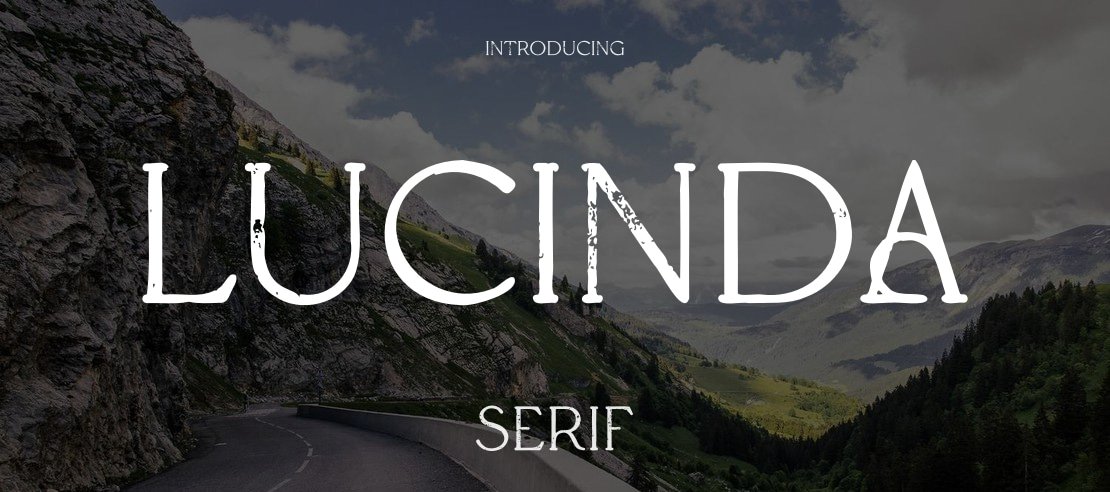

About Lucinda Font
I came across Lucinda Font while working on a small editorial layout that needed a calm, bookish feel. I wanted a serif that felt readable, but not stiff or old-fashioned. This typeface caught my eye because the shapes looked gentle, yet still quite clear on screen.
I decided to test Lucinda Font in a simple magazine-style spread for Free Fonts Lab, with long paragraphs and a few pull quotes. I was curious how it would behave in real body text, not just in a pretty sample. That trial told me a lot about its character and how it might work in everyday design tasks.
Font Style & Design Analysis
Lucinda Font is a serif typeface with a clean, literary voice. The serifs feel soft and slightly rounded rather than sharp, which gives the text a friendly mood. Strokes stay quite even, so the overall texture looks smooth and easy on the eyes, especially in longer reading lines.
The designer of this font is unknown, at least from every source I could find while testing it. That said, the work feels considered enough that it likely came from someone who understands book typography. Nothing in the shapes feels random or careless, which is not always the case with free serif fonts.
The letterforms sit on a comfortable x-height, with open counters that help keep words legible at smaller sizes. Spacing is on the slightly loose side, which adds air but can stretch lines if you use wide columns. The rhythm feels steady, so paragraphs appear calm rather than noisy. It works best for quiet, text-heavy layouts, and feels less suited to bold, high-impact headlines that need strong contrast.
Where Can You Use Lucinda Font?
I see Lucinda Font working well in magazines, blogs, and simple editorial projects where reading comfort matters. In print, it handles medium sizes around 10–12pt quite nicely, giving a soft but stable texture. For web articles, it stays readable, though I suggest slightly tighter line spacing than the default.
For branding, this serif font family can fit thoughtful, low-key identities like bookshops, small publishers, or educational projects. It will not shout on a poster, but it can support a brand that wants trust and warmth. I have paired it with clean sans-serif headings, and that contrast helps guide the eye through longer pages.
At large sizes, the small details in the serifs become more visible, giving titles a subtle, classic tone. At very small sizes, the open shapes still hold up, but you may want to increase tracking a touch for clarity. I would avoid it for interfaces or tight labels where you need extreme clarity, and keep it for reading-driven layouts and calm visual identity systems.
Font License
The licence terms for Lucinda Font can vary depending on where you download it. Some sources may allow personal use only, while others might permit commercial projects. I always recommend checking the official licence text before using it in client work, just to stay safe. For me, its quiet, readable nature makes it worth that extra check.






Leave a Reply